Suriname has a food culture that most of the world has never tasted. Six ethnic groups, three centuries of shared kitchens, and one city where you can eat roti for lunch, saoto soup for breakfast, and pom at every birthday, funeral, and celebration in between.
The food here is not fusion in the modern sense. Each cuisine stayed itself. When you walk into a roti shop, you get real Hindustani food. When you find a Javanese warung, you get real Javanese food. They just happen to be on the same street.
Here is what to eat and where to find it.
Pom: the dish that defines the country
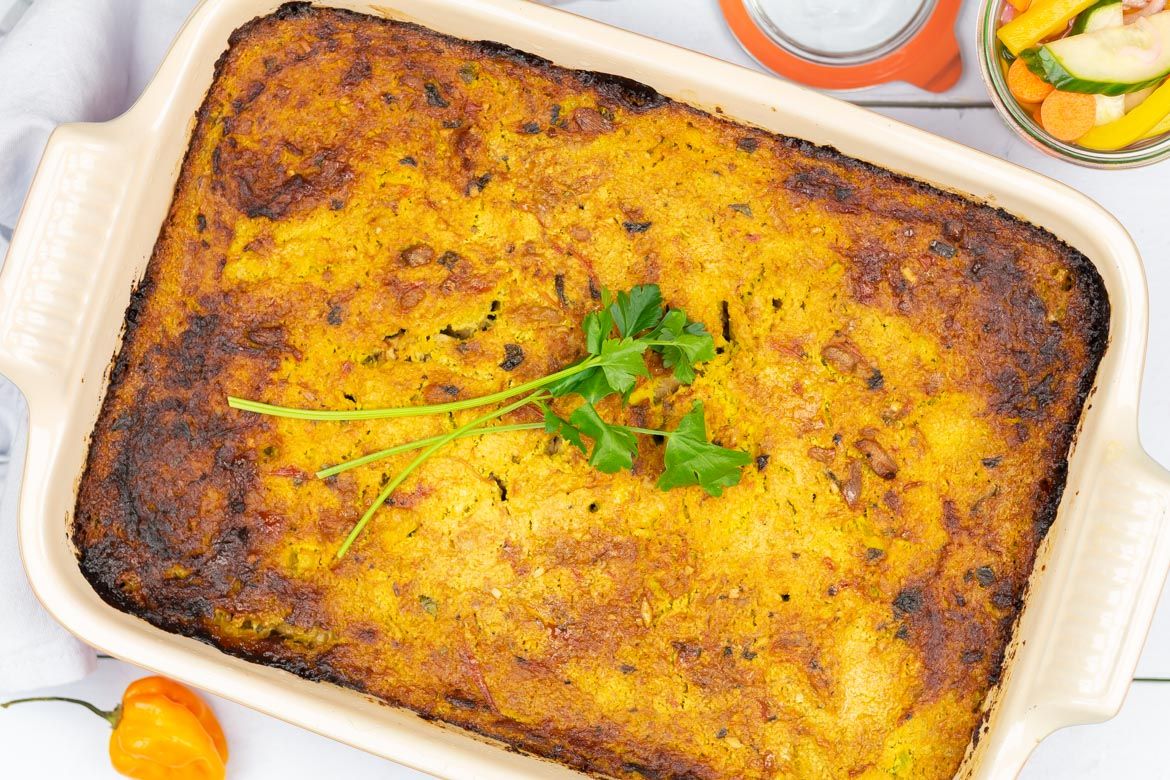
Photo: smaakmenutie.nl
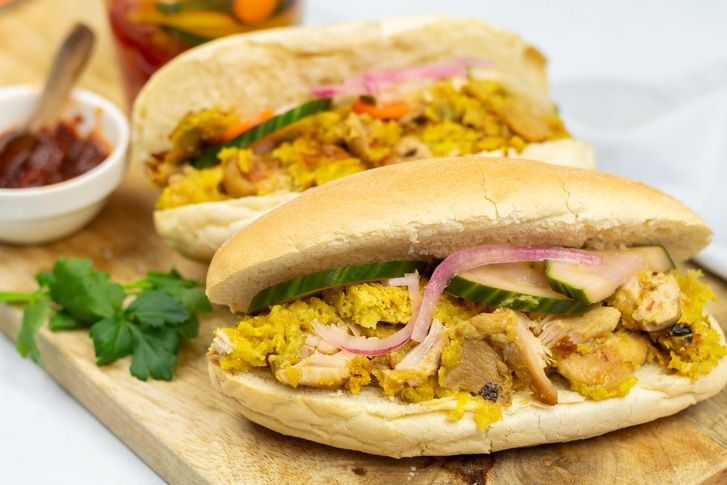
Photo: smaakmenutie.nl
There is a saying in Suriname: "Without pom, there are no birthdays."
Pom is a baked casserole made from grated pomtajer root (a tropical tuber related to taro), layered over and under slow-cooked chicken, citrus juice, tomatoes, and spices. The top goes golden-brown in the oven. The inside is dense, slightly sweet from the root, sharp from the orange, rich from the chicken.
The history behind it tells you something about Suriname itself. The dish originated with Portuguese-Jewish plantation owners who arrived after the Spanish Inquisition. They brought a potato oven dish from Europe. Potatoes didn't grow in Suriname's tropical soil, so the Afro-Surinamese workers suggested pomtajer, an indigenous root that grows in the interior. Over time, other communities added their own touches: piccalilli from Hindustani cooks, soy sauce from Javanese kitchens, ginger and lychee from Chinese households.
The result is a dish that belongs to everyone and to no one community in particular. It is now considered part of Suriname's intangible cultural heritage by UNESCO.
Eat it at any restaurant that serves Creole food. Or better, get it as a broodje pom, stuffed into a bread roll, at a market stall. Smaakmenutie has a step-by-step breakdown of how pom is made if you want to try it yourself.
▶ More on Surinamese food culture
Roti: the lunch you plan your morning around
Surinamese roti is Hindustani in origin. A soft, thin flatbread served with curried chicken or vegetables, long beans (kouseband), and potato. The curry is slow-cooked. The bread is made fresh. Ask the price before you order. Roti shops sell out fast, and the best ones don't need a sign.
Roti shops open early and sell out fast. The good ones are gone by 1pm. Go at 11am if you want options.
The most popular spots are small, often family-run, with a short menu on a chalkboard and plastic chairs. Roopram Roti near the Waterkant and Joosje Roti Shop on Zwartenhovenbrugstraat are the two most visited. The lines are usually locals on their lunch break. Join the queue.
Saoto: breakfast soup from Javanese kitchens
Saoto is a light chicken broth with bean sprouts, shredded chicken, and herbs, served with rice or bread on the side. It comes from Javanese tradition, similar to Indonesian soto ayam, and in Suriname it is primarily a breakfast or early morning dish.
Find it at a warung: a small Javanese food stall, often open from around 7am. Order early. Most warungs run out before noon. The broth is clear, fragrant with lemongrass and galangal, and lighter than it sounds. It is exactly what you want on a hot morning.
Souposo on the Waterkant in Paramaribo serves saoto and other Surinamese soups. Good for breakfast or a midday meal.
Bakabana: the snack on every corner
Bakabana is fried plantain in batter, served with spicy peanut sauce. It costs almost nothing. You find it everywhere: street carts, market stalls, outside school gates, at the side of the road near bus stops.
The peanut sauce is thick and comes with heat. If you prefer mild, ask for it on the side. The plantain inside is soft and sweet against the crunch of the batter.
This is the snack of Suriname. Eat it standing up.
Bakkeljauw: the sandwich worth waking up for
Bakkeljauw is salted cod, shredded and spiced, stuffed into a bread roll. A broodje bakkeljauw is one of the great street sandwiches of the country. Find it at the Central Market from early morning, or at small shops called baka oso (literally "back of the house") throughout Paramaribo.
The saltiness of the cod with a hit of Madame Jeanette pepper on the bread is a combination that takes one bite to understand.
Bami and nasi: Javanese staples
Bami is fried egg noodles. Nasi is fried rice. Both come from Javanese tradition and both are eaten across Suriname for lunch and dinner, often with satay, a fried egg, and sambal on the side.
The best Javanese food in Paramaribo is in Blauwgrond, a neighbourhood about 15 minutes by car from the city centre. The area is packed with family-run warungs that open mainly in the evenings. Enormous portions, low prices.
Mirosso in Blauwgrond has been a Paramaribo institution for years. Go early, because the bami goes fast.
Bibit is another well-regarded option for Javanese food closer to the centre.
Moksi alesi: rice that carries history
Moksi alesi means "mixed rice" in Sranan Tongo. It is a Creole dish made from rice cooked together with salted meat, dried fish, beans, and whatever vegetables are available. It was created during slavery: people used every scrap of food available to make something filling and nourishing. Today it is served in restaurants across Suriname and eaten at home without ceremony.
It is the most honest dish in the country. It doesn't try to impress. It just feeds you.
The Madame Jeanette pepper
Before you order anything, know this: the Madame Jeanette is a bright yellow pepper, roughly the same heat as a habanero, and Surinamese people put it on almost everything.
It comes as a sauce, as a whole pepper on the side, or cooked directly into dishes. Ask before you pour. Try a small amount first. It is not decoration.
The pepper is grown locally and you will see it piled up in the Central Market alongside tropical fruits and fresh herbs.
Where to eat in Paramaribo
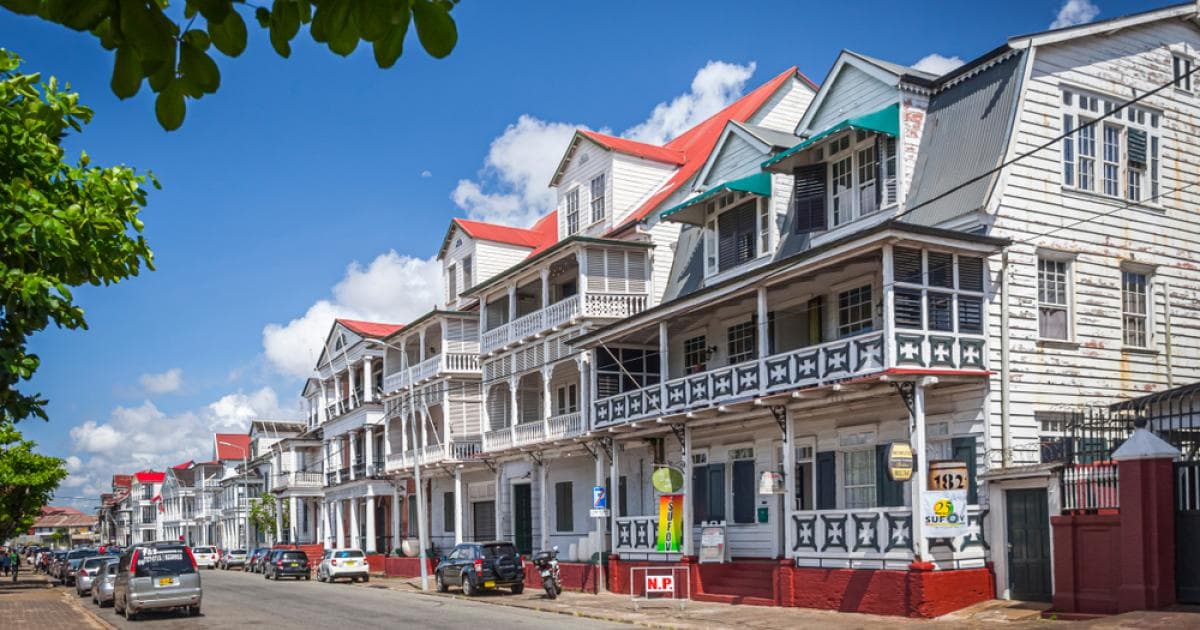
The Central Market (Centrale Markt) is the starting point for any food exploration. Open from early morning, closing around 1pm. Two floors of vendors selling fresh produce, dried fish, spices, and ready-to-eat food. Go hungry and let the smells lead you.
Blauwgrond for Javanese food in the evenings. Take a taxi, it's too far to walk comfortably.
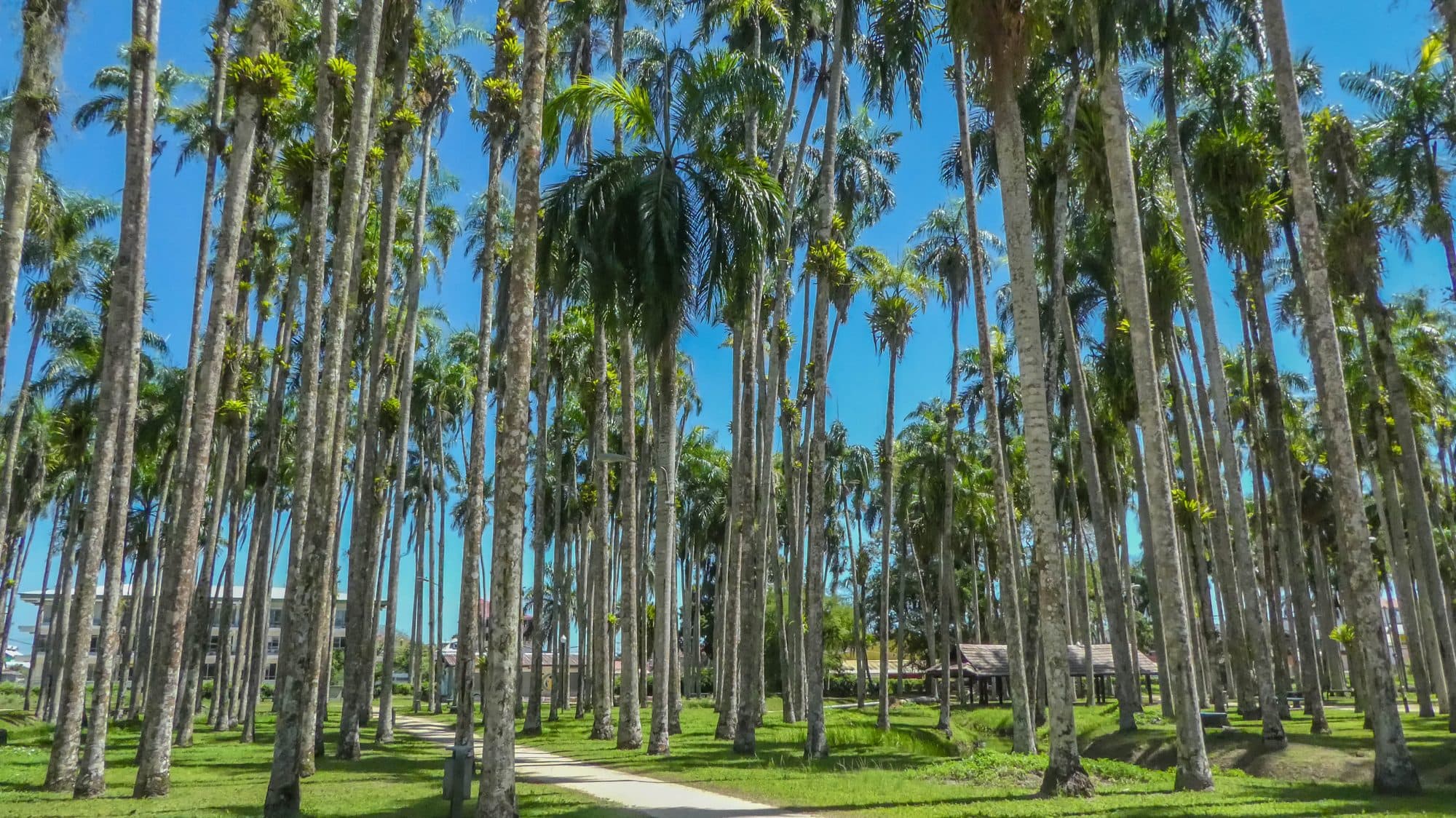
The Waterkant for a sit-down meal along the river. Several restaurants line the promenade. Soela serves pom with chicken and is worth a visit.
Souposo for soups. A short walk from Palmentuin. Crunchy peanut soup and saoto are the signatures.
Zus & Zo near Palmentuin for satay and a relaxed outdoor terrace.
Prices at local stalls and warungs are reasonable by any measure. Sit-down restaurants on the Waterkant cost noticeably more. Suriname has seen significant inflation since 2020, so always confirm prices before ordering. The money guide has the current exchange rate and what to budget.
One rule
Suriname's food is not found in hotel restaurants. It is found in small family shops, at market stalls, in the warungs of Blauwgrond, and at the street corners where someone has a grill and a bag of plantains.
Walk toward the line of locals. Eat what they're eating. Ask what something is if you don't know. The answer will be a short food history lesson and usually a recommendation for somewhere better.
For more on what makes Surinamese food culture unique, the cultural experiences guide covers the festivals and traditions behind the dishes. And the Paramaribo guide covers the city neighbourhood by neighbourhood.